Microsoft in the Metaverse: What the Acquisition of Activision Blizzard Means for the Future of the Internet

If you have played Candy Crush, World of Warcraft, Call of Duty, Starcraft, Diablo or Overwatch you may be familiar with the company behind those games, Activision Blizzard. If you’ve never heard of these and want nothing to do with gaming, keep reading as well because this news is going to affect everyone. Activision was in the news again this week because Microsoft made a move to acquire them for $70 billion.

That number is staggering for a lot of reasons but the most prominent reason is that Activision does not have the best reputation right now. The company is facing allegations and lawsuits galore. Despite that, If this deal goes through, it could be the biggest tech company acquisition in history. Ever.

Why Microsoft is writing such a big check for a troubled gaming company?

What does this has to do with the metaverse and Facebook/Meta and how it will affect the fate of Activision Blizzard's game portfolio?

Gaming Industry

Activision has had nonstop bad press for the last eight months or so. But you wouldn’t know that based on the sale price. And that’s because that price reflects just the scale of the gaming world in 2022 and the growth potential that people think lies ahead for gaming companies. This acquisition is not as simple as placing a calculated bet on growing Microsoft's gaming sector. If you CNTRL+F the acquisition announcement, Microsoft mentions gaming 19 times but they also reference the term metaverse twice. They spell out that they think this acquisition will give them access to the building blocks for the metaverse.

The Metaverse

When we talk about the metaverse today, most people are describing an interconnected virtual world or worlds, that form this digital mirror reality. A lot of people see the metaverse as the next big thing in tech, the next iteration of the internet, and the medium upon which web3 operates. It will be a place where we socialize, work, learn and play, use digital avatars, collect digital possession and use digital currency. Microsoft’s acquisition of Activision Blizzard is the counter move to Facebook changing its name to Meta and announcing their ambitions to control the metaverse. A Queens Gambit Accepted move for the chess players out there. Reading between the lines, this announcement is a very clear statement that Microsoft also has ambitions to control the metaverse.

If you hear metaverse and you think SIMS or Second Life and aren’t that impressed, I implore you to do more research because those applications are like prototypes compared to what we are looking at now.

The Interoperability Problem

The grand vision for the metaverse is this common digital universe where all these different companies, brands, and creators can build immersive experiences and we seamlessly move from one experience to another. I this ideal state we are all individual companies playing in the same sandbox. But Right now what we have looks more like individual metaverse bubbles that might one day be connected but for now, are islands.

The problem with what Microsoft and Meta are doing is that it doesn’t facilitate true interoperability or the ability to seamlessly connect these digital worlds. The Indicator Podcast brought this up and I think they are 100% correct. If we go back to web1.0, we needed to come up with a set of protocols that allowed anyone to build on the worldwide web. These are things like hypertext transfer protocols or HTTP, and URLs and as the Indicator pointed out, these are all things that anyone can use. And they weren’t created by a corporation, but by nonprofits.

As of right now nobody, nonprofit, DAO, or otherwise has created a common set of protocols for the metaverse and we probably won’t have that any time soon.

Metaverse has become a tech buzzword. Companies are tacking metaverse onto their names and product names because VCs are throwing money at anything that makes metaverse moves. My company, Future Sight AR has been building mixed reality app that live in the metaverse for three years now and usually when we speak to investors, we have to explain what this digital world is and why it’s valuable for companies to join it. Now I just say “we make software that brings your organization into the metaverse” and VCs can’t write a check fast enough. And while we are building as one of these island bubbles of metaverse we building in such a way that when the ability to connect to other digital worlds is a reality, we can very simply plug in. But right now that is just a vision on our product roadmap because to make it a reality, all these different companies, some of which are massive like Microsoft and Meta/Facebook will have to build infrastructure that works together to create this interoperable realm.

So I’m skeptical about Facebook or Microsoft building this holistic metaverse. I think what they’re actually building is immersive iterations of their products which will be one of these metaverse island bubbles, that is self-contained.

The Gaming Connection

Getting back to the acquisition, what does this countermove by Microsoft have to do with Activision Blizzard and their game portfolio? In Microsoft's announcement Satya Nudella said that "Gaming is the most dynamic and exciting category in entertainment across all platforms today and will play a key role in the development of metaverse platforms.”

The Activision portfolio includes some games that already let people have a limited metaverse experience. These are games like Call of Duty, World or Warcraft and Overwatch. and yes, people are there to game, but they are also there to socialize, whether that is natively over the game or talking on Discord while playing. To put this in perspective some people meet up at a persons house to play poker, chat and have a beverage. Others get in a gaming chair, spawn into a game, meet up with friends avatar and get on Discord to chat. It’s sort of like a new social network but I’m hesitant to call it that because it doesn’t quite fit the profile of a social media network. It’s something else, that’s kind of its own new category and I don’t have a label for it yet.

For Non-Gamers

Even if you aren’t into gaming or internet culture, you should care about who ends up building the metaverse and deciding how it will work. We don’t want history repeating itself. When social media and web2.0 began appearing around 2010-2012, no one really cared who controlled social media or if there were any global standards social media companies should be adhering to. Facebook and Twitter were still new and it was only early adopters that were on the platforms. Now we all use social media. Maybe not every platform - for the sake of your mental health, I hope you aren’t on every platform. Gaming is heading that direct too, where even if you aren’t a gamer, you might still use the platform for socializing and entertainment and it is just becoming ingrained into society and culture. The same way that right now most of us aren’t content creators or influencers, but we still use Instagram, Facebook, TikTok, and Twitter. When used in this way gaming is just one of the gateways that is onboarding people into the metaverse. Whether you are a gamer or not, you will probably end up on one or more of these platforms where companies like Microsoft and Meta will have access to scary amounts of your personal data.

Next Steps

I hope that this post motivated you to continue to educate yourself on what these massive companies are up to since they will probably control a good portion of our lives. I hope that maybe someone out there feels inspired to be the nonprofit or DAO to set up metaverse-wide protocols that allow everyone to participate in this next iteration of the internet. Stay safe out there.

xoxox LL

Go Solo - Inspiring Ambitious Solo Entrepreneurs to Turn One Day into Day One with Lori-Lee Elliott

female entrepreneur working on a laptop at a coffee shop overlooking a nordic fjord in the summer

Interested in starting your own entrepreneurial journey but unsure what to expect? Then read up on our interview with Lori-lee Elliott, CEO of Future Sight AR, located in Houston, TX, USA.

This week I sat down with the team at Subkit to talk about what it takes to Go Solo and start a business. Check out the interview here on Subkit.

Holiday Gift Guide for Crypto, Metaverse and Web3.0 Geeks

Welcome to the 2022 gift guide for web3.0, crypto, and metaverse geeks! We’ve got VR headsets, EEG bands, DeFi Wallets, NFTs, Books and even jewelry. And before you ask, yes, these are for both men and women…and anyone in between.

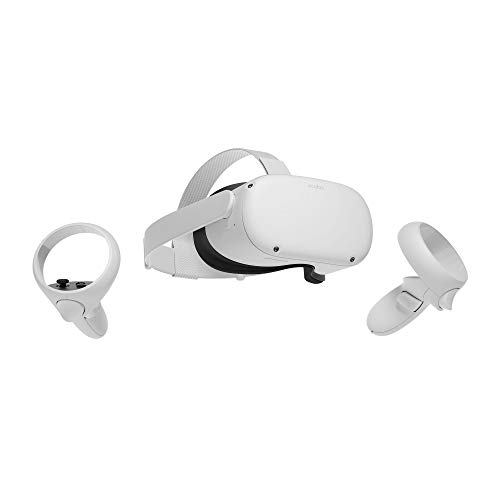
Meta Quest 3

I felt like this was an obvious one, so I wanted to talk about it first. the Quest 3 is a must for any virtual reality enthusiast. You do need a Facebook account to access the apps, so keep that in mind. Some standout apps on the Quest 3 include Beat Saber, The Room VR: A Dark Matter. Not to mention all the apps you can sideload such as Sport Model, Helium, and Gorilla Tag.

EEG Headband

Don’t let the name fool you, this is not a hair accessory but a wearable EEG sensor that measures your brainwave patterns. So how does this relate to the metaverse? More and more apps are using biometrics such as your brainwave patterns to customize your experience within immersive apps. The Healium meditation app even has the option to add in an EEG headband to bio-feedback your mediation session.

Cold Wallets

Any crypto investor looking to step up their game will appreciate this gift. Cold wallets are considered the most secure way to store your crypto because they aren’t connected to the internet. My two top choices for 2021 are Trezor Model T and Ledger Nano X.

Trezor One + Billfodl
Buy on Amazon

When ordering a cold wallet be sure to order directly from the brand, and if you can have the item shipped directly to the recipient to reduce the chances of it being tampered with in transit.


Books

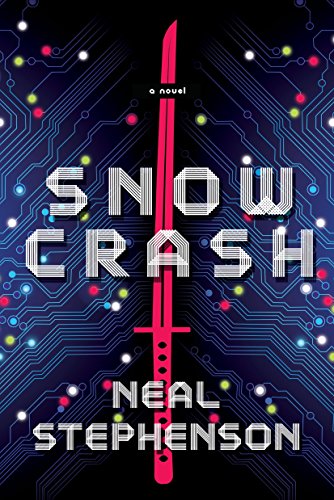
I have a mix of fiction and non-fiction in here. First up is Snow Crash by Neal Stephenson. This is the first novel to use the term ‘metaverse’. It is a dystopic novel set in a future version of Los Angeles where the Federal Government has been taken over by corporations and people move between the real world and a virtual one, where they are represented by avatars. It’s eerie how much of that novel came true given that it was written in 1992.

Snow Crash
By Stephenson, Neal
Buy on Amazon

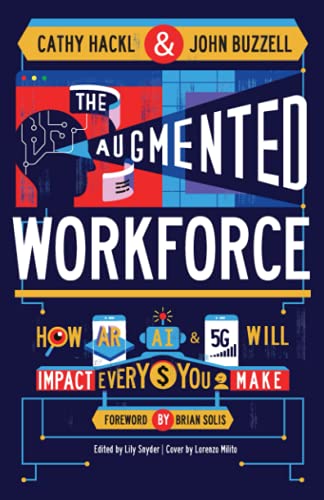
Next up we have The Augmented Workforce by our own Cathy Hackl. In this book, Cathy goes over how business leaders can use 5G, artificial intelligence, augmented reality, and other emerging tech to scale companies and grow revenue.

By Hackl, Cathy, Buzzell, John
Buy on Amazon

She also published Marketing New Realities if you are shopping for a friend in marketing or sales.

By Hackl, Cathy, Wolfe, Samantha G.
Buy on Amazon

Again I would be remiss if I didn’t mention Ready Player One. It’s really the quintessential virtual reality book of this generation. There are some collectors editions if you’re looking for something a little *extra*.

By Cline, Ernest
Buy on Amazon

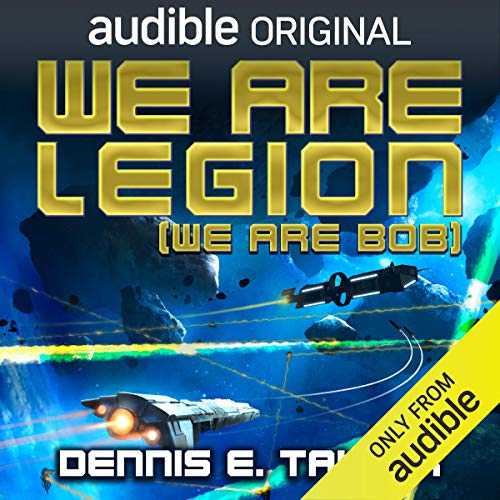
Finally, this one is actually best consumed as an audiobook, but you can buy the print version as well and that is we are legion, we are bob. it’s a sci-fi novel written by Dennis Taylor. This series is about a software developer Bob Johansson who agrees to have his consciousness digital preserved, should he die. And you guessed it, he dies and wakes up a century later to find that he has been uploaded into computer hardware and is slated to be the controlling AI in an interstellar probe looking for habitable planets. Casual. It’s a great series, again it was written to be an audiobook so you could always bundle this gift with an Audible subscription.

By Dennis E. Taylor
Buy on Amazon


NFTs

screen shot of crypto punks on opensea

NFT stands for non-fungible token and is a digital asset such as an image, animation, music, domain or collectable whose ownership is secured on a blockchain. You can learn more about NFTs here. NFTs can be thousands, sometimes millions of dollars so definitely go into this one with a budget in mind. If you’re just starting I recommend taking a look on OpenSea, as they have a bit of everything. If you’d like a step-by-step breakdown on how to gift an NFT, and more options for where to buy them, be sure to subscribe because I will be going over that in a future video.

Digital Clothing

For the lifestyle influencer or fashionista in your life, we have a Dress-X subscription. This app is available to anyone with a smartphone and allows you to try on digital clothing and share the resulting images. It drastically cuts down on the carbon footprint associated with manufacturing and shipping real-world clothing and is perfect for those who wear an outfit once but won’t or don’t outfit repeat. I have a video on my experience with the app here if you want to take a closer look. Some of the designs on Dress-X are also NFTs so you could do a combo gift and get someone the app subscription and a collectible digital outfit.

Credit: Vogue.com /Dress-X

The Pokemon Ring

I think it’s really difficult to do geek jewelry well without it looking gimmicky or cheap, so I was so happy when I found this Pokemon ring by Geek Jewelry, that is offered in both mens and women's sizes. If you know a Level 40 Pokemon Trainer they could seriously love this gift. It’s available in silver, white gold, rose gold, platinum and palladium and looks like a piece of fine jewelry (because it is).

picture of rose gold and silver ring with a single diamond and black band around the center

Pokeomon Ring from Geek Jewelry

ICYMI, Pokemon Go is one of the most successful augmented reality games out there, available on Android and iOS. The creators of Pokemon Go, Niantic, recently raised $300M to build infrastructure to support a metaverse and help to power the next evolution of the internet.” Niantic didn’t specifically mention blockchain or NFTs, but they main backer, Coatue, is known for bankrolling major crypto projects including Chainalysis and Fireblocks. So it might be a good idea to stay on the good side of your pokemon trainer friends as their pokemon could be worth some serious real-world cash in the near future.

That is all for this year’s guide. I hope this gave you some ideas for gifts! Have a happy holidays and don’t forget that you can save this as a pin for later:

Billion Dollar Startup Ideas for Beginner Entrepreneurs

There’s no such thing as a billion-dollar idea, just billion-dollar execution. It’s a cliche, but it’s true. If you are looking for a new venture, why not go big? Here are some billion-dollar business ideas that need someone to build them.

Traditional Innovation


Easy Clothing Recycling

The EPA estimates that textiles make up 5% of all landfills in the US and only 15% of unwanted clothing is actually recycled. The average US citizen throws away an estimated 70 lbs worth of textile waste each year. Textile, or clothing, recycling services do exist, but the market is incredibly fragmented and sometimes you have to pay more than the clothing items original value to get it recycled. If a company could make it as easy as putting out your cardboard boxes and actually turned the textiles into either a yarn is re-spun and ready to be knitted or weaved into other garments, or in the case of synthetic fabrics, shredded, granulated and then melted to create new fibers for use in new polyester fabrics…it could be a billion dollar business.

Sustainable Water Desalination

It’s pretty well known at this point that pretty much every country is facing a water crisis. Environmental researchers estimate that 60% of the world’s population will experience water shortages by 2025. And already today, water some nations resorting to desalinating seawater to provide drinking water. Desalination is the process of removing salt and other impurities from seawater. It is expensive, time consuming and uses a lot of energy. For example, in Saudi Arabia, around 10 percent of the [country’s] electricity is used for seawater desalination and in Abu Dhabi, the desalination plants contributes more than 22% of the Emirate’s total CO2 emissions…and that’s for one city. This is why sustainable, energy-efficient desalination is a billion dollar industry. We’ve seen solar powered water desalination proved effective, but we have yet to see it on an industrial scale, or incorporate complementary technologies, such as wind power.

Nuclear Power Systems for Deep Space Exploration

For exploration in our solar system, solar power is currently pretty common, but to go into deep space, exploration teams will need something that doesn't rely on sunlight. Nuclear power systems can also be smaller than solar arrays, making the spacecraft easier to maneuver in space. If the mission is manned, the nuclear power system can also be used to power the life support system, cutting down on costs and flight time, according to Space Daily https://www.spacedaily.com/reports/Nuclear_Power_In_Space_999.html given the restrictions and hazards associated with working with radioactive materials, there's been relatively little innovation in this space (no pun intended), and to successfully pull off such a venture you need a combination of nuclear engineers and literal rocket scientists. That team is not going to be easy to put together but if you can pull it off the payoff will be a billion dollar business and then some.

Personal Finance

Holistic Investment Portfolio Analysis Platform

An investing platform that takes into account all types of assets include crypto, owning stock multiple ways (for example owning Amazon stock, Amazon ETF, Amazon in an Index Fund), owning NFTs, that works with multiple accounts. Platforms like mint.com sort of do this, but not really. The account links are also prone to breaking which messes up that great dashboard view that is the whole point of the app. Easily a billion dollar business, I would use, I couldn’t find anything like this already existence, so if you know of something like this let me know.

Dividend Investment Strategy App

Millennials, especially in the wake of the pandemic, are investing with the goal of living off of dividends. If you invest, you may have receive a ‘dividend’, which is a cash payment to the shareholder, typically paid out each quarter. The amount of the dividend paid is based on a number of factors, including, profit and amount invested. An App to help you meet your dividend goals and probability of meeting those goals could be another billion dollar company. There are lots of regulations and finance…or is it fin-nance?…laws to abide by here, so a money background would come highly recommended if you go after this one.

Creator Economy

All of the ideas in the Creator Economy are ones I would love to work on. There’s so much opportunity.

NFT Avatar Services

so you can own the rights to your likeness in virtual worlds. With the proliferation of virtual reality and mixed reality, people are spending more time as avatars or holograms. Right now you can use a service to create a life-like avatar based on your appearance or you can use a standardized avatar with customizable features such as hair color and eye color. If you get that life-like rendering made, there is actually nothing stopping someone from copying your likeness and tearing around the meta-verse as you. Right now the average person might not care too much about this, but they will. When you look at celebrities and creators that make a living based on their likeness, they care and would pay a lot of money to secure not just their face, but their whole likeness. Could you imagine if someone made a life-like Kim Kardashian avatar in VR? I don’t think she would be cool with that.

Accelerator for Creators

In the startup world you can apply to programs such as Y-Combinator, 500 Startups, MassChallenge and Techstars to get a cash injection and go through business bootcamp to see if your idea is viable. Usually you give up some equity, or ownership, in your company to do this. No such program exists for creators and it should. A good percentage of the under 25 population wants to be some kind of creator and that is a massive opportunity. Unlike startups, creators don’t really go venture scale so you’d need a slightly different model, but the same architecture of some upfront cash, a creator bootcamp and giving up some equity would work. With the rise of NFTs and tokens there are some more nuanced opportunities there to invest in a creator by tokenizing their community. That’s happening today, but with established creators, but it would be interesting to see it done with rising creators.

Creator Support Services Platform

(i.e. video editors, thumbnail designers, podcast producers, etc). This is another one that if I had time to work on, I would. As a marketplace app you could get an edge over platforms like Fiverr, UpWork or Freelancer is by 1) niching down and specializing in creator support services and 2) qualifying the candidates through a course or certification so you can compare apple to apples and 3) embrace growth and long term partnership. The other problems with freelance platforms is that the people who end up staying there are often the ones who are not savvy enough to run things on their own. Sometimes it’s because they are just starting out, and that’s fine, that’s what these platforms are for. But then you get this layer of freelancers that have mades hundreds of thousands of dollars through the platform, charge high rates, but never graduate to running things on their own. So I think there’s opportunity there to also launch these freelancers, which the other platforms actively discourage.

Education

Online Course Aggregator

Online course industry is growing like crazy. There are dozens of platforms like Udemy, Coursera, LinkedIn Learning, Skillshare, Udacity that serve millions of people. And then there are platforms like Teachable and Kajabi that allow users to post individual courses under their own company branding. What we don’t have is a way to see all the offered courses for a given topic across all of these platforms. It’s a huge discoverability problem. An aggregation tool also has the advantage of being able to offer *more* objective reviews and is a billion dollar idea inside a billion dollar industry.

Hydrogen Industry Safety Training

If you work in the energy sector you may have noticed a spike in “green" hydrogen production project lately. Green hydrogen means either the carbon generated during production was captured, or the facility used renewable energy to break apart water molecules, and is carbon neutral. As production increases, so does transportation and use of hydrogen. This is great for reducing CO2 emissions, but that the caveat is that hydrogen is much more hazardous than most other hydrocarbon gases, like natural gas or methane. A lot of the companies going into hydrogen production are new and while production is on the rise proactive safety training for the transportation and use is not. This is a massive “heads up” to the industry that the appropriate training needs to take place now. While a training company would not be venture scale, it could still do very well, especially if the offer remote options and hit the billion dollar mark.

Lesson Learned Database

or “failure database” for companies that don’t make it and why. We have Pitchbook for the venture capitalist community to see how startups are funded and they charge $1500 a month for a subscription. Imagine the value in a database of business ventures and what was their fatal flaw. In silicon valley there is a good "pay it forward" culture where if someone comes to you with questions about a previous venture - success of failure - you pay it forward and take the time to educate that founder on what you learned. But that system is not universally available, But a database could be. This model is not just for companies, lots of industries that do project based work have a “lesson learned” database that is rarely, if ever, actually used. So there is a massive opportunity to reinvent how we view failure and turn it into a business.

If you decide to start a company based on one of these ideas, or if you’d like me to do a deep dive into any of these let me know your thoughts in the the comments.

Products for a Stretch Mark-Free Pregancy

Some links may be affiliates***

If you’ve done any Googling on stretch mark prevention during pregnancy you have probably seen the two main answers: genetics and a slow and steady weight gain. That’s also exceedingly not helpful when your up at 3am looking for ways to fade or prevent mommy tiger stripes. Enter these three products. Keep reading below for the three products I used to escape pregnancy with no permanent stretch marks.

best-products-stretch-marks-pregnacy

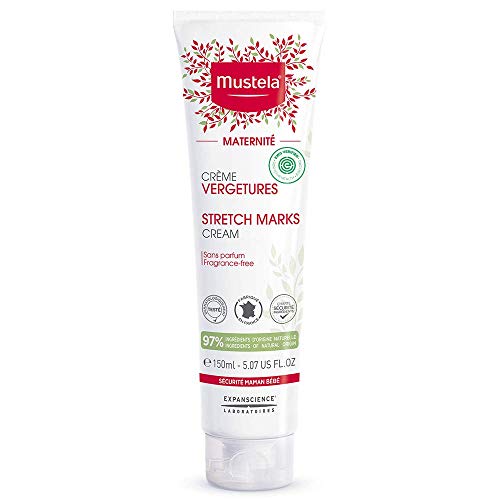
First Trimester: Mustela

AmazonUs/EXQEV
Buy on Amazon

I started using stretch mark cream the same month I found out I was pregnant and I started with Mustela. It’s hypoallergenic and safe for first trimester bellies. A word of caution: get the unscented version. I bought the regular scented one and even though it is very mild, my morning sickness did not agree with it.

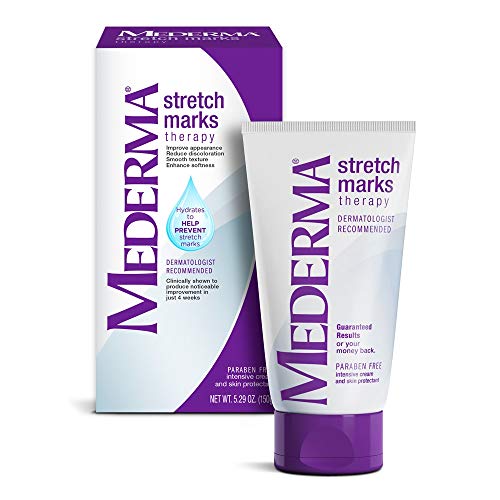
Second & Third Trimester: Mederma

Once you make it into the second trimester you are clear to bump up to the Mederma products. Their Stretch Mark Therapy cream contains Cepalin, hyaluronic acid, and Centella asiatica plant extract to help fight scarring. It’s a little pricey, but one bottle lasted for the rest of my pregnancy.

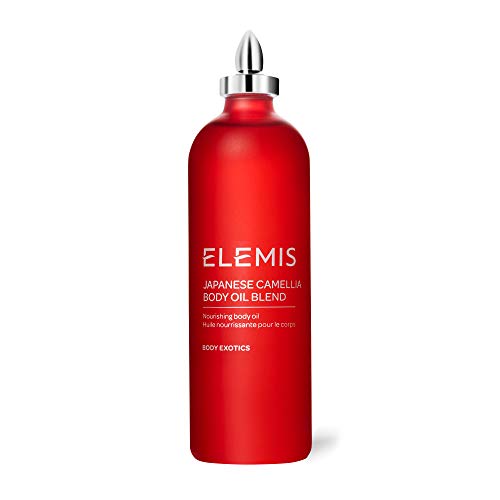
Anytime: Elemis

Elemis products seem to appear on every podcast out there and after hearing about their Japanese Camellia Body Oil on The Skinny Confidential for stretch mark prevention during Lauryn’s pregnancy I hit “Add to Cart”. The real skinny? This product doesn’t have any medical ingredients - it is just oil - and I can’t say it prevented stretch marks. So why is it on this list? Along with stretch marks is itchy and tight skin and this oil DID help with that. You can use it anytime and while it won’t get rid of the cat clawed look, it is soothing and when you feel like an over inflated balloon.

Don’t see a product you think should make this list? Let me know! Don’t forget to Pin this post and save it for later.

 
products stretch mark free pregnancy